Clearance London: Recycling & Sustainability
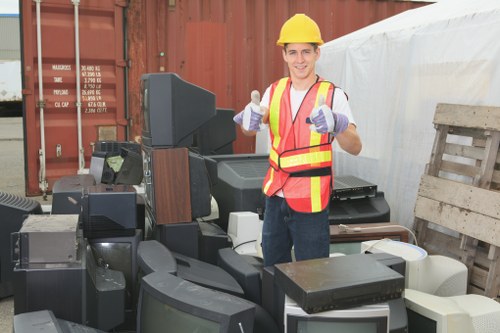 Clearance London is committed to measurable, long-term environmental improvement across every clearance and waste removal we carry out. Our sustainability page sets out a clear recycling percentage target: we aim to achieve a 75% recycling and recovery rate of all collected materials by 2028, prioritising reuse and material recovery before any residual disposal. As a London-based clearance company, our approach to clearance services in London combines operational efficiency with a strong circular-economy ethic. We track tonnage diverted from landfill, monitor reuse rates for furniture and appliances, and publish progress in internal sustainability reports.
Many London boroughs already run robust separation schemes that make local recycling straightforward and more effective: councils typically collect dry mixed recycling, glass, paper and card, and a separate food waste stream in numerous areas. We tailor our collections to match borough-specific systems — whether that is kerbside segregated collections, communal recycling points, or borough-run bulky waste pick-ups. By aligning our methods with municipal rules we increase capture rates for materials such as paper, plastic, glass and organic waste while minimising cross-contamination.
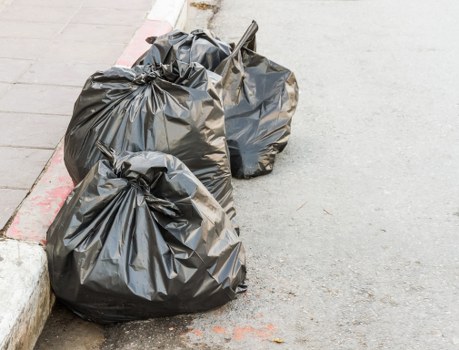 Our logistics follow the flow of the city. Items collected through domestic and commercial clearances are taken to a network of local transfer stations and material recovery facilities across north, south, east and west London. These transfer hubs enable efficient sorting of recyclables, consolidation for onward processing, and fast redistribution for reuse where appropriate. On-site sorting at transfer stations improves the quality of segregated streams so that metals, timber, textiles, and WEEE (electronic waste) are recycled to the highest possible standard.
We have established partnerships with a range of charities and social enterprises to maximise reuse and social value. Instead of consigning reusable furniture and household items to the waste stream, we work with organisations that refurbish and redistribute goods to people in housing need. Our current collaboration framework includes:
- Local homelessness and housing charities that accept clean, serviceable furniture and appliances.
- Not-for-profit upcycling and repair initiatives that extend the life of textiles and furnishings.
- Community reuse centres that sell low-cost reclaimed goods to support local projects.
These charity partners help convert clearance activity into tangible community benefit, reducing waste while supporting vulnerable Londoners. We prioritise transferring items to charitable partners before evaluating recycling or energy recovery routes.
 The fleet that moves tens of thousands of items across the city is central to lowering our carbon footprint. Clearance London operates a growing number of low-carbon vans and vehicles: a mix of fully electric vans for inner-London work, hybrid vehicles for longer urban routes, and Euro-6 efficient diesel where operationally necessary. Route optimisation software reduces mileage and idle time; consolidated collections cut double-handling and vehicle movements. These measures reduce emissions and help us meet our broader low-emission goals as part of the wider transition to clean transport in the capital.
We also manage specialist recycling streams relevant to urban clearances. Electronics and white goods are processed under WEEE regulations to reclaim metals and hazardous components; timber is graded for reuse or chipped for biomass or composite reprocessing; metals (ferrous and non-ferrous) are separated and sold to authorised metal recyclers; textiles that cannot be resold are diverted to textile recycling channels. This segregation is important particularly in London where borough schemes and private transfer stations emphasise high-quality sorted inputs to the recycling market.
To ensure transparency and continuous improvement we measure progress against a set of key performance indicators. These include tonnes recycled, percentage diverted from landfill, percentages of items donated to partners, and CO2e reductions from vehicle operations. Internally we run quarterly audits of material flows and regular training for crews to keep contamination low and reuse high. An internal reuse-first policy means staff are incentivised to identify items suitable for donation, refurbishment, or resale, not simply for disposal.
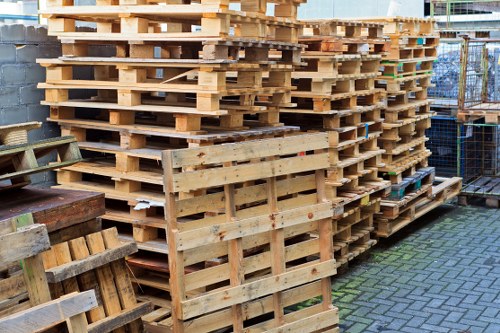 Community engagement is central to our sustainability strategy. We support local repair cafés, collaborate with boroughs on bulky waste campaigns, and run workshops with housing associations on responsible disposal and reuse. Clearance in London is more than removing items: it is about creating local circular systems that keep value in the community. By helping residents and businesses understand separation rules and reuse options we reduce the volume of materials that enter the residual waste stream.
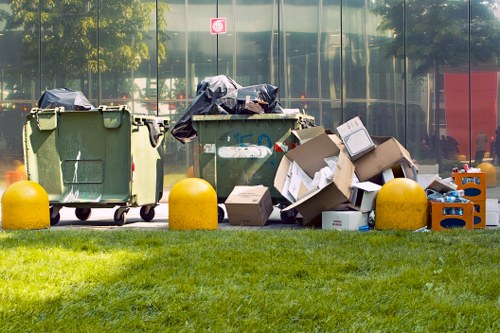 In summary, our approach to London clearance and sustainability balances ambitious recycling targets with practical, locally tailored operations: partnering with charities, using local transfer stations, investing in low-carbon vans, and aligning with borough waste separation systems. We are committed to increasing our recycling percentage year-on-year, expanding reuse partnerships, and lowering transport emissions through electrification and smart logistics. Together, these steps help build a more resilient circular economy for the city and ensure that each clearance contributes to a cleaner, greener London.